

Today’s edition of Callaway Climate Insights is free for all our readers. We really want to bring you the best and latest in climate finance from around the world. Please subscribe now.
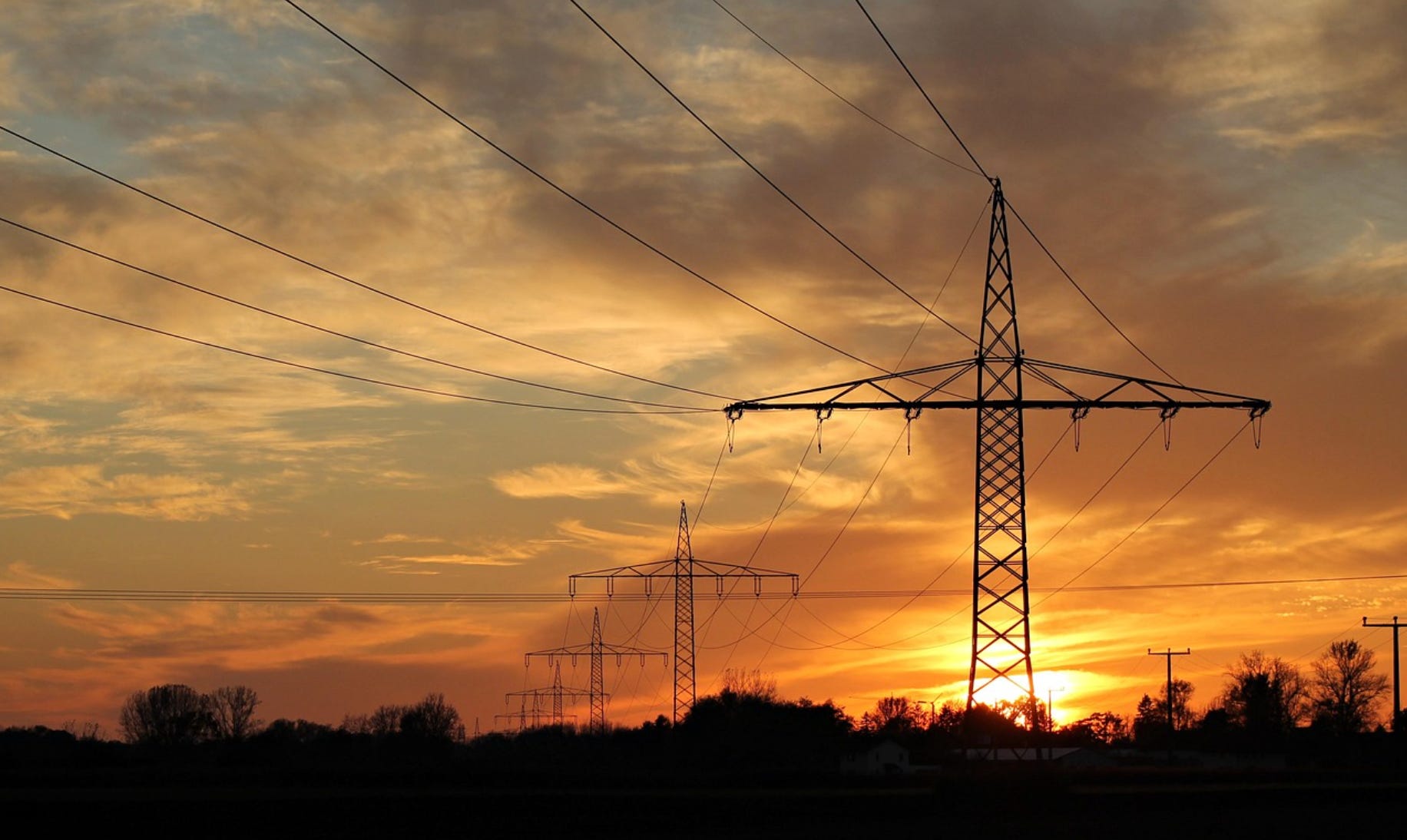
The backtracking on climate pledges by large Wall Street firms in the past few years has fully spread to the biggest tech companies as their emissions from power used to scale their AI ambitions soar.
Last month, Microsoft MSFT 0.00%↑ paused its purchase of carbon removal contracts to offset its pollution, igniting a firestorm of concern in that nascent business of taking carbon from the atmosphere.
This week, Microsoft is weighing whether to remove one of its most ambitious sustainability targets, according to Bloomberg News. That’s the goal of using renewable energy purchases to match 100% of its hourly electricity usage by 2030. Microsoft issued another “non-denial denial,” saying its sustainability goals remain the same but it needs to adjust strategies as its AI energy ambitions develop.
The problem is that in their rush to build data centers around the world to compete in the AI arms race, the large tech companies such as Microsoft, Amazon AMZN 0.00%↑, Alphabet GOOGL 0.00%↑ and Meta META 0.00%↑ have for the most part chosen natural gas as their power source, as it currently is quicker and easier to use. As a result, their emissions have leaped in the past few years, rather than fallen as hoped for. So, throwing money at buying clean energy or carbon removal contracts starts to look irresponsible, at least on the balance sheet if not for the climate.
Microsoft, in particular, has been a leading advocate of clean energy usage, and last year did several major deals to buy nuclear energy from major developers. But the AI arms race changes week to week, day to day, and nobody in the big tech companies wants to be left behind. Climate pledges, all the rage five years ago before the advent of ChatGPT, are unfortunately now becoming collateral damage.
Don’t forget to contact me directly if you have suggestions or ideas at dcallaway@callawayclimateinsights.com.
Follow us . . . .
Twitter | LinkedIn | Facebook | Instagram
Zeus: Why offshore wind companies take Trump’s money and run

. . . . Last week, the Trump administration said it would pay two more offshore wind projects to stop building in a deal that would require them to direct the money to oil and gas projects instead. The deal makes short-term sense, writes David Callaway. The investors are simply getting back the money they spent on licensing fees to the Biden administration for the right to build wind farms off the East and West coasts, in exchange for a vague promise to produce more oil and gas. But long term, the wind projects that were developed by the investors, including asset management giant BlackRock, will suffer as investors and consumers increasingly move to wind and other renewable energy to save on costs in an energy security world.
Thursday’s subscriber insights

California leads short-term fix of Colorado River water crisis
. . . . California and two other states agreed last week to cut their water usage for both farms and consumers over the next three years as the rapidly drying Colorado River crisis in the Western U.S. becomes unsustainable after another year of drought and lack of snowpack.
The action by California, Nevada and Arizona, comes as a larger group of seven states which represent 40 million water users of the important river, have failed to come up with a compromise after years of negotiations and federal prodding.
The three states who agreed to cut, the so-called lower basin states, are among the biggest users. They said they would share cuts of about 3.2 million acre-feet of water, with cuts coming to both farms that use the water for irrigation and consumer rationing. California’s cuts come to about 13% of its usage, according to the LA Times.
The Colorado River has been depleted significantly in the past quarter century, with its two biggest basins, Lake Mead and Lake Powell, each down to less than a third of full capacity. With the cuts, the states will likely be forced to pay farmers not to use the water to grow their crops and find incentives for consumers to cut back.
These are the sacrifices, forced upon business and the public, that will become more prevalent in coming years if action isn’t jointly taken to prevent the ravages of climate change. As we can see here, the little guy will suffer the brunt of failed negotiations and poor water management over decades.
For investors, the Colorado River scenario will play out in more expensive water rights and price rises among certain crops, which will feed to the businesses of the wholesalers, supermarkets, and ultimately the consumers themselves. The three lower basin states deserve a hand for taking the decision earlier, but it won’t be enough unless there is a complete agreement among all users soon.
Editor’s picks: Climate change or crazy weather? Plus, AI booms sparks grid warning
Watch the video: It’s one of the most commonly debated questions in the climate world: Is this weather we’re experiencing natural, or is it linked to man-made climate change? In this episode of The Climate Question from BBC World Service, hosts Graihagh Jackson and Jordan Dunbar are joined by BBC Lead Weather Presenter Matt Taylor.
AI boom sparks rare power grid warning
The North American Electric Reliability Corp., the non-profit security monitor for North America’s power grid, said it will issue its highest level of warning May 11 about threats to the power system from large data centers, underscoring the challenges facing utilities and grid operators grappling with a surge in electricity demand. E&E News by Politico reports the agency said, “Computational loads, such as data centers, could increase exponentially in the next four years.” NERC said in a draft of the alert that “significant risks” to the bulk power system “need to be addressed through immediate industry action.” Lee Shaver, a senior energy analyst at the Union of Concerned Scientists, called NERC’s action a “big deal,” noting it is only the third time in history that the organization has issued a Level 3 alert.
Latest findings: New research, studies and projects

Alaskan megatsunami wrought by climate change
An Alaskan megatsunami bigger than the Empire State Building was triggered by climate change, researchers say. You may not have heard about it because it happened in the state’s Tracy Arm Fjord at 5:30 a.m. Aug. 10, 2025. The fjord is a popular tourist spot, but at that early hour, no boats or cruise ships were in the area. The glacier supporting the mountain has retreated as temperatures rose, leaving the rock unsupported and triggering a landslide. Scientists said the resulting wave was up to 1,578 feet tall, making it higher than New York City’s Empire State Building. It was so powerful it violently stripped away vegetation and left behind scarring on the steep rock walls. University of Calgary geomorphologist Dan Shugar, lead author of the study published in the journal Science, told Sky News, “The fact that the landslide occurred this early in the morning was unbelievably lucky. Next time — and there will be a next time — we may not be so lucky.” University College London geophysicist and study co-author Stephen Hicks said, “This collapse triggered a seismic wave observed around the globe.”

Words to live by . . . .
“In the spring, I have counted 136 different kinds of weather inside of 24 hours.” — Mark Twain.