

Today’s edition of Callaway Climate Insights is free for all our readers. We really want to bring you the best and latest in climate finance from around the world. Please subscribe now.
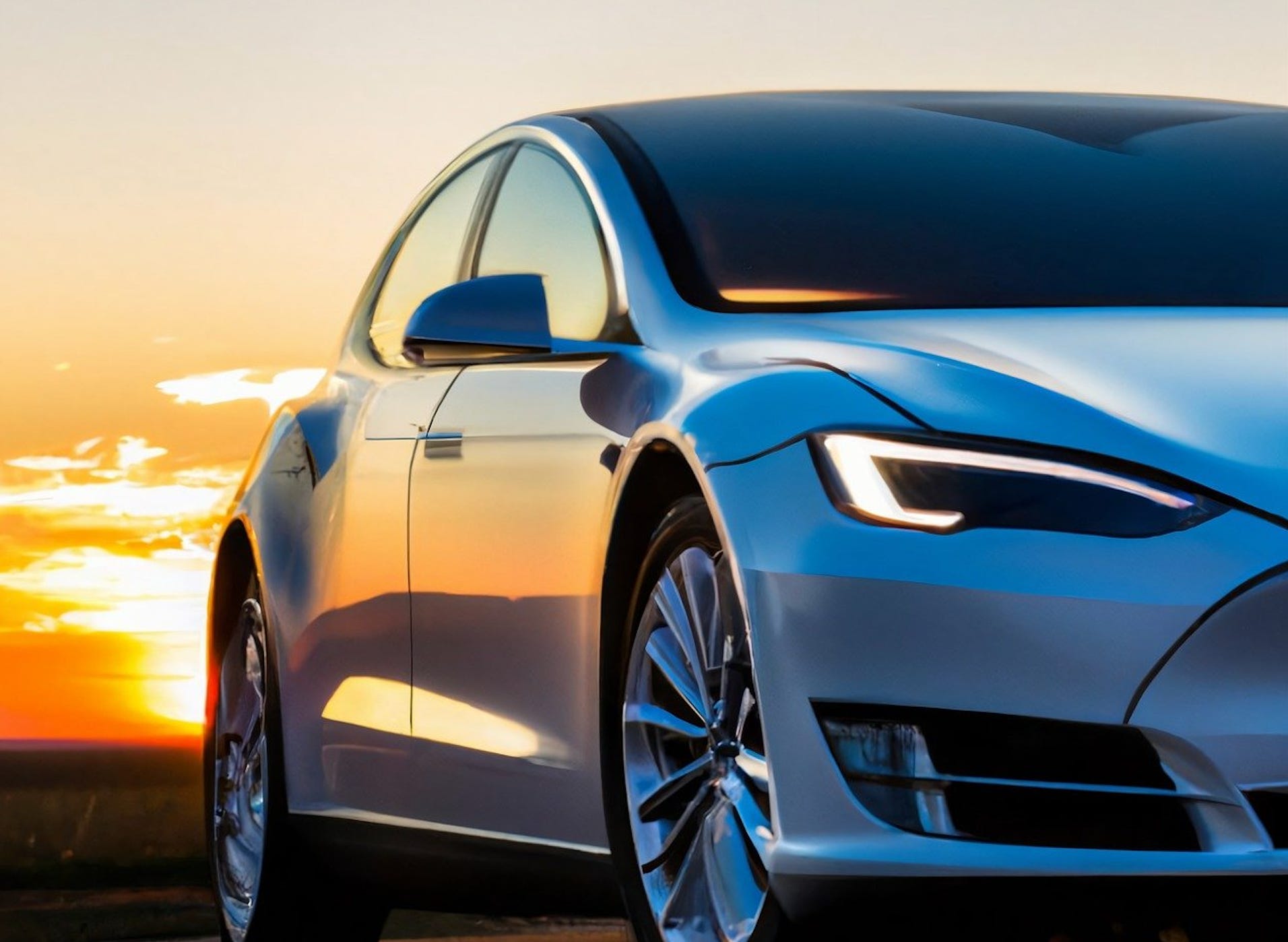
A few months ago, a golfing buddy of mine bought a Tesla for his teenage daughter. Seemed extravagant, even for here in Northern California. But turns out he only paid $14,000 for it, accessing the used market. He told us local dealers were flooded with used Teslas.
Now the numbers are starting to bear out the shrewdness of that move. Used electric vehicle sales leaped 29% in February, year over year, coming after a similar 31% rise in January, with average prices last month a bit under $34,000, and falling, according to Cox Automotive. EVs made by Tesla TSLA 0.00%↑ were the most popular among buyers, followed by vehicles from Ford F 0.00%↑, Chevrolet and Hyundai.
The results, coming among declining sales of new vehicles nationwide, show that far from ditching EVs because of the withdrawal of federal subsidies last year, car buyers are simply finding cheaper models, more in line with what they hope new prices will eventually get down to — the $30,000 range. As 3-year leases on EVs expire in coming months, drivers now accustomed to the fun and relative ease of driving a vehicle without gasoline are turning them in and buying used.
Electric vehicles are relatively new to the market, but it seems they depreciate a lot less than the average gasoline-powered vehicle, with EV batteries the major component. The average EV battery can last about 100,000 to 200,000 miles, retaining about 90% of its effectiveness beyond the first 100,000, according to reports. So a 3-year old Tesla is only slightly degraded, but sells for a little more than half the price.
The adoption of electric vehicles is currently saving about 2.3 million barrels of oil a day in the U.S., according to Bloomberg, with that number projected to increase to more than 5 million barrels a day by 2030. At a time when oil prices are spiking because of the Iran war, the continued adoption of EVs is welcome not just for helping Americans avoid gas lines, but for the environmental benefits that may help protect us from the wacky weather we’re seeing across the country this week.
The next step is for the automotive companies to take note and to find ways to produce new EVs that compete in the $30,000 market. Already Ford and Tesla, among others, are working to get down there, where the buyers are.
Don’t forget to contact me directly if you have suggestions or ideas at dcallaway@callawayclimateinsights.com.
Follow us . . . .
Twitter | LinkedIn | Facebook | Instagram
How green investors fail the volatility test

. . . . Green investors will often tell you they’re making money and helping the environment, but when trading conditions get tough and volatility surges, they’re trying anything they can to squeeze out profit like everyone else, according to a new study, analyzed by Mark Hulbert. The study, which put 100 investors under trading room conditions, found that while green investors feel good about their image of helping fight climate change, the green trade becomes more and more fragile the tougher the trading becomes. The study supports Hulbert’s oft-quoted maxim that for investors to really be able to make an impact on climate change, they probably will have to learn to accept lower returns in the long run. A tough sell, to be sure.
Thursday’s subscriber insights

Trump’s Iran war spreads to California
. . . . President Donald Trump may have most of his mind on opening the Strait of Hormuz and ending the Iran war, but he apparently still has time to think of presidential politics. Trump and Energy Secretary Chris Wright signed a pair of executive orders earlier this week to reopen offshore drilling in California, a direct strike at potential presidential rival Gov. Gavin Newsom.
One of California’s most controversial offshore oil facilities, closed for more than a decade after a major spill, was reopened by operator Sable Offshore Corp. almost immediately off the coast of Santa Barbara and began shipping oil ashore ahead of plans to reopen three direct pipelines.
A flurry of lawsuits followed, and Newsom and Wright engaged in a nasty exchange of statements, with Wright saying that the Iran war was responsible for rising oil prices and the U.S. needs to open the facility for national security.
Newsom said he would see the White House and Sable in court, and that California’s environment shouldn’t have to pay the price for Trump’s war on Iran. Meanwhile, California average gasoline prices are sitting at about $5.54 a gallon, above the national average of $3.79, as oil prices continue to rise on international markets.
The political scuffle over offshore oil is a clear signal that energy prices, vs. energy security, are going to be a key issue in the midterm elections this year and the presidential election in 2028, with Trump and Newsom set to go several more rounds beforehand.
Editor’s picks: Beavers, still the environmental superheroes; plus, focusing on on fossil fuels is ‘delusional’
Watch this video: Building resilience to floods, droughts, and wildfires — could beavers offer nature-based solutions to climate change? See more in this special report from the BBC World Service.
Iran war shows that doubling down on fossil fuels is ‘delusional’
The Iran war’s disruption to the global energy market should be a wake-up call for countries that continue to rely on fossil fuels, United Nations climate chief Simon Stiell said this week. Inside Climate News reports that in Stiell’s address to a European audience at the Green Growth Summit in Brussels, the executive secretary of the U.N. Framework Convention on Climate Change warned strongly against fossil fuel dependence. He urged government leaders to speed up the renewable energy transition to ensure security and economic growth. “Climate cooperation is a cure for the chaos of this moment,” Stiell said, according to a transcript published online. ICN notes the U.S.-Israeli war with Iran has cut off a fifth of the world’s oil supply, triggering global shortages and price spikes, with ongoing volatility. Describing the last few weeks as “yet another abject lesson,” Stiell said doubling down on fossil fuels is the wrong response. “This is completely delusional,” Stiell said. “History tells us, this fossil fuel crisis will happen again and again.”

Words to live by . . . .
“It was one of those March days when the sun shines hot and the wind blows cold, when it is summer in the light and winter in the shade.” — Charles Dickens.