


. . . . Welcome back to Green Lights. Here’s our roundup of the best of Callaway Climate Insights. This week, David Callaway looks at how the midterm elections are starting to show up in stock sector performances, and what Tesla’s earnings reveal about a future merger with SpaceX. Ahead of Sunday’s runoff election in Brazil, Michael Molinski weighs the risk to $100 billion in climate finance flows to Latin America. Go buy yourself some Halloween candy this weekend and please subscribe to support our climate finance reporting.

. . . . Less than two weeks out from the U.S. midterm elections, the potential for Democrats to flip Congress has started to show up in stock sector performances, with energy among the biggest players, writes David Callaway. While nobody expects a reversal in anti-climate legislation and regulation in the second half of Trump’s term, a gridlocked Congress will at least be able to stall further attacks. Much will depend, however, on how high interest rates rise.

. . . . Only a day after Elon Musk finally confirmed that his SpaceX and Tesla companies were formally exploring a merger, Tesla’s third-quarter earnings reflected a company that is sorely in need of some new direction. The whole hodgepodge paints a picture of a company in transition from electric vehicle maker to new age AI creator — but one that needs some guidance, or at least a clear mission.

. . . . Climate finance flows to Latin America that have doubled in the past four years to more than $100 billion are at risk from the critical election this weekend in Brazil, where the politics over destruction of the Amazon are seen as a major battlefield for the world’s war against global warming, writes Michael Molinski. Progress in Brazil under President Luiz Inácio Lula da Silva could be derailed if right-wing candidate Flavio Bolsonaro, son of the former president, wins in a runoff on Sunday. While just one of the countries seeing flows of international investment into climate projects and deforestation efforts, Brazil is an important bellwether for Latin America.

Faced with higher energy prices going into the winter and a political decision with no real positive side, UK Prime Minister Andy Burnham blinked this week, approving the restarting of drilling in the smaller of two North Sea gas fields off of Aberdeen on Scotland’s East Coast. A political decision to be sure, David Callaway writes. But one that will hurt Britain’s carefully crafted standing among nations dedicated to reducing fossil fuel emissions and fighting climate change as global warming hits Europe hard.

. . . . Since the beginning of the 21st century, global greenhouse gas (GHG) emissions have followed an increasing trend, mainly due to the increase in emissions from China and the other emerging economies, according to the Emissions Database for Global Atmospheric Research from the European Commission. China, the U.S., India, the EU27, Russia and Indonesia were the world’s largest GHG emitters in 2025.
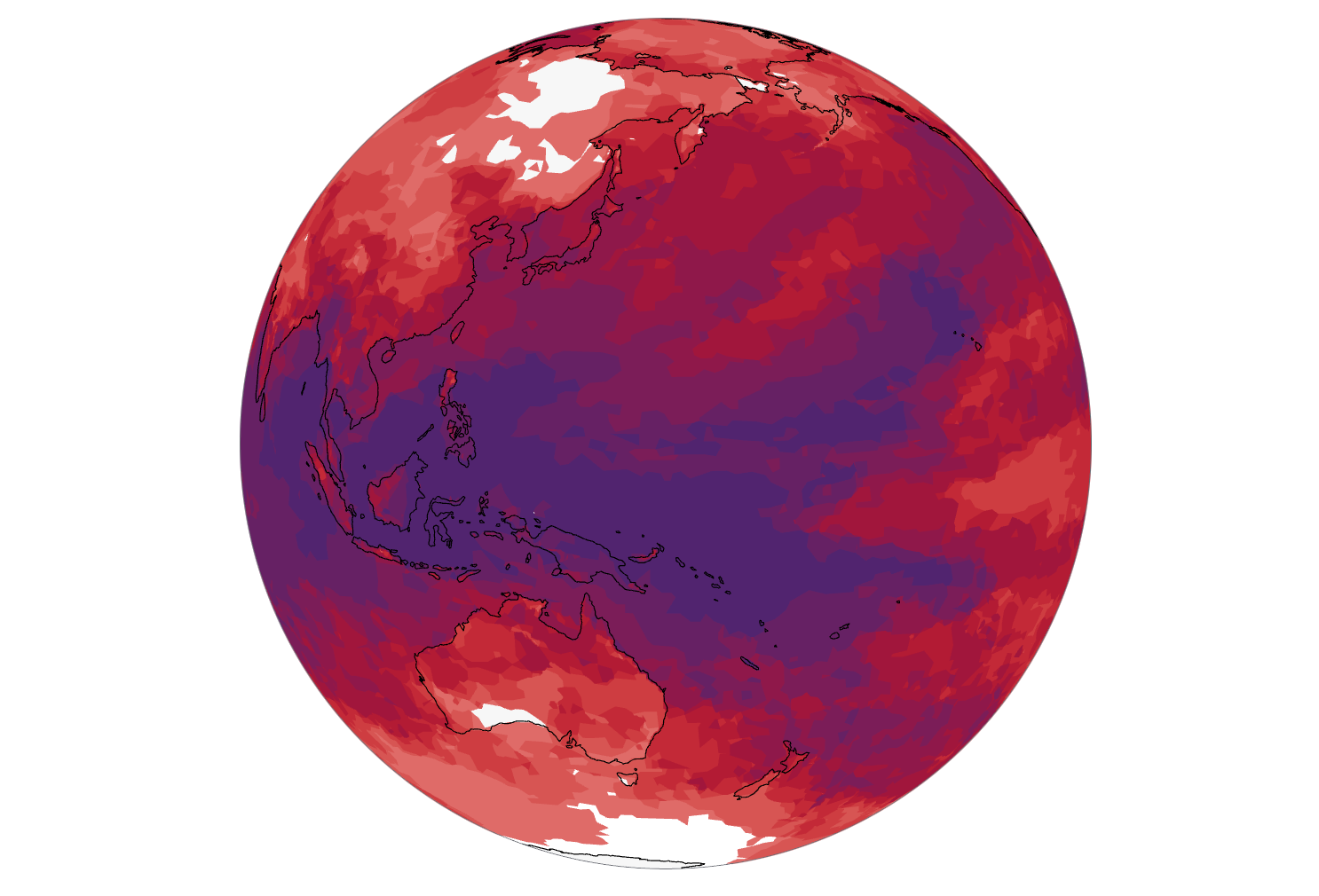
. . . . Extensive heat waves used to be rare. But a data-driven examination of global temperatures by Reuters shows the emergence of a weather phenomenon it calls “heat storms.” “They now swarm the planet, upending life around the world from Texas to Ivory Coast to Poland,” the report says. Over the past 65 years, Reuters says, heat waves have evolved from isolated episodes to extensive, cascading weather events that can blanket large parts of the planet for months or even years at a time.
More greenery . . . .

Fighting fire with firepower: UK to use military helicopters to battle wildfires (Reuters)
A river runs through it: Brazil’s Supreme Court suspends permit for major Amazon gold mine (AP)
If they know about it: Washington state’s new cooling law protects farm workers (Yale Climate Connections)
On the map: U.S. Drinking Water Contaminated With ‘Forever Chemicals’ (Newsweek)
Venezuela: The secret terms of Trump’s oil deal (ProPublica)