

Today’s edition of Callaway Climate Insights is free for all our readers. We really want to bring you the best and latest in climate finance from around the world. Please subscribe now.

The Supreme Court’s hearing Monday on whether states and local towns can sue big energy companies for climate damages is admittedly a long-shot. But as the big tobacco companies know, stranger things have happened.
The case brought by Boulder, Colo. against ExxonMobil XOM 0.00%↑ and Suncor Energy SU 0.00%↑ eight years ago has pushed its way successfully through the courts to the point where Big Energy has had to appeal to the Supremes to prevent not only billions in damages payouts but a flood of other lawsuits from 50 states and localities.
History tells us that the High Court typically — but not always — votes against environmental challenges to federal authority, especially at the state level. Energy companies have been waiting for this day and were only slightly concerned last week when Justice Samuel Alito recused himself from the hearing because of his extensive oil and energy investment holdings. That still leaves a 5-3 Conservative majority.
A ruling isn’t expected for months, long after the upcoming midterm elections, but it would form a protective federal shield for energy companies against future litigation as the cost of climate damages to healthcare, infrastructure and economic output soars across the nation. The companies argue that favoring Boulder would give the mountain town the right to seek damages for activities even outside its state borders.
This is a longshot, but just like in sports, that’s why they play the game. Plaintiffs against tobacco companies lost for decades before the tide turned. Examples of harm to states from global warming pile up by the week. We may have to wait until a new era and mindset at the government level, but at some point, the damages will be enough that the energy companies, currently enjoying bumper profits from the sky-high price of oil because of the Iran war, will be held to account.
We have long been disappointed in this Supreme Court and don’t expect it to change its stripes on this one. But it has surprised before, and even a partial ruling in favor of the states — for example a ruling or legal opening where lawsuits could persist under certain direct damage circumstances in each state — would be a significant victory for the climate justice movement.
If you have ideas or suggestions for us, contact me directly at dcallaway@callawayclimateinsights.com.
Why clean energy stocks are performing so poorly this year

. . . . Clean energy stocks have outperformed fossil fuel, or brown stocks, for most of the past five years, but this year they have fallen significantly short, writes Mark Hulbert. The difference might be the Iran war, which has skewed energy inflation and led to a bonanza in profits for fossil fuel companies as oil prices soared. Green stocks have historically had a higher cost of capital than brown stocks and so investors have demanded higher returns, but this year energy inflation has raised the cost of capital for green stocks through higher borrowing costs, resulting in the stock price swings. The average clean energy fund or ETF through the first three quarters, which end today, is up 4.9%, compared to growth of 37.2% for the average fossil fuel fund, according to Hulbert.
World News Day: Stand with us

. . . . A decade ago, the World Editors Forum, which I used to be involved with, created World News Day to celebrate global journalism and warn about the threats to the future of the press from authoritarian governments. This year, as in the past, World News Day was celebrated on Sept. 28 and Callaway Climate Insights wants to join the hundreds of other news organizations who are part of it in saluting the brave journalists who fight against restrictions on press freedom every day to bring us the news that is so vital to free and democratic societies. Some of the best opinion pieces from around the world were collected on the link below. We encourage you to take a look. Happy World News Day.
Read more on why journalism matters at worldnewsday.org.
Thursday’s subscriber insights
Fervo Energy launches unique geothermal plant in Utah
. . . . Fervo Energy, one of the hottest green energy IPOs of the year when it debuted in May, fulfills a promise to launch a large-scale, commercial geothermal plant in Utah today as it formally begins selling electricity to a local energy company.
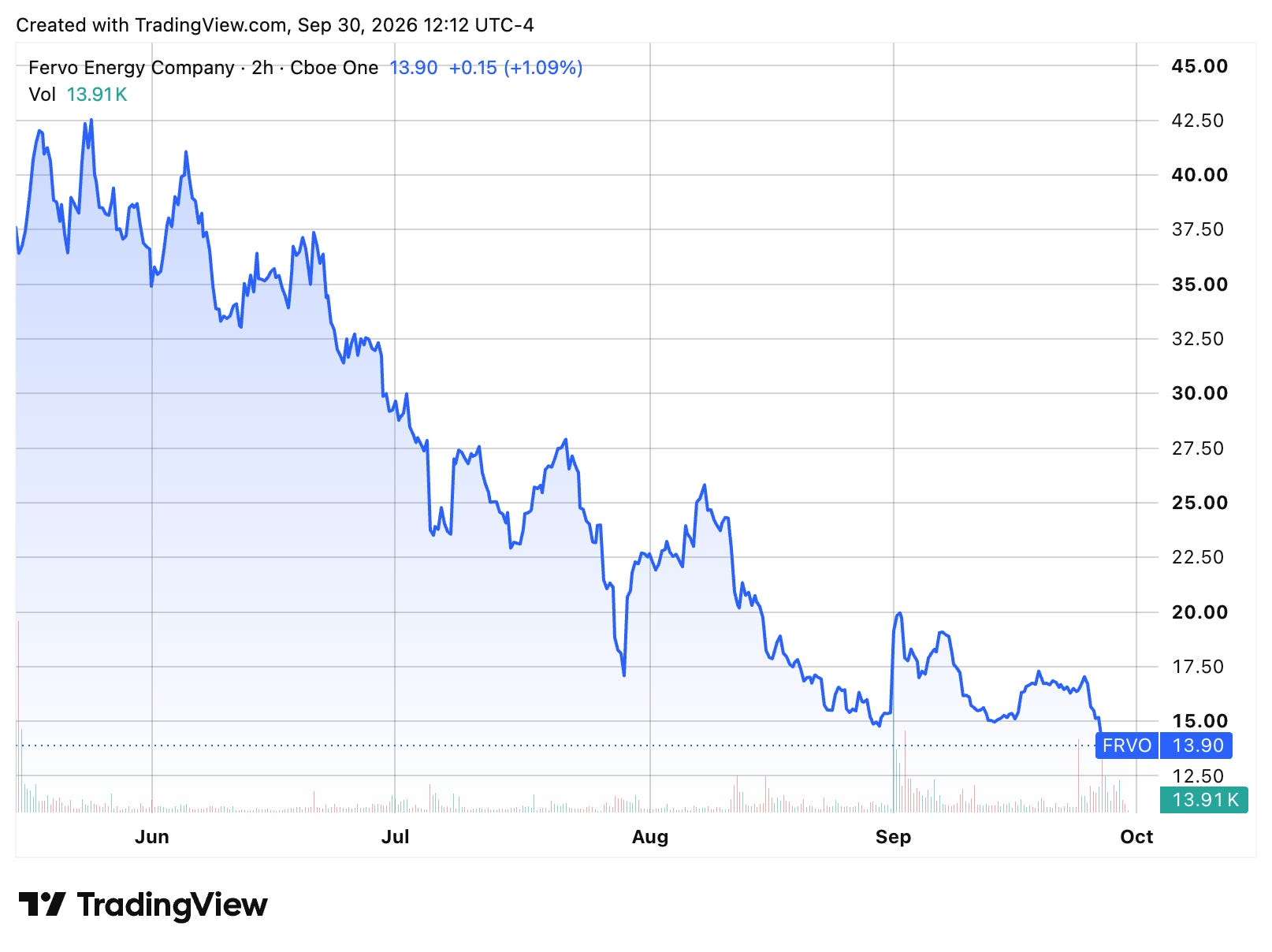
Fervo, one of first geothermal companies to go public, raised $1.9 billion in May at a valuation of almost $10 billion, popping 33% on its first day as the public hailed the beginning of a new era in clean energy. Geothermal energy, which draws power from accessing steam from hot water in the ground, represents only a fraction of 1% of all clean energy. Fervo’s Utah plant is unique, however, in that it uses oil and gas drilling techniques to create pools of steaming water from molten rocks far under the earth’s surface.
Despite the hoopla, Fervo shares FRVO 0.00%↑ have dropped like a cold stone since their public debut, trading today at about half of their IPO price despite a brief jump in September when it announced a major deal to sell geothermal energy to Google GOOGL 0.00%↑ for use in its AI data centers. Higher borrowing costs and a general backlash against data centers have hit green energy stocks hard this year.
Fervo claims the launch of its $2 billion Cape Station plant in Utah can start to change the narrative on geothermal stocks, providing energy to utilities and customers on a round-the-clock basis in a technology that can scale and provide energy from vastly more pieces of land than previous geothermal methods.
As with many of the clean energy IPOs of the past, the hype of the offering often overshadows the true timeline and cost of the developing technology, which is one of the reasons data centers have turned to proven natural gas for power amid the global AI energy arms race. Fervo investors, at least, are hoping this week’s launch can begin to change that dynamic.
Editor’s picks: How to live on earth; plus, ‘playing through’ solar panels
Watch this video: What if the solutions to building a better future already exist? “How to Live on Earth” is an ambitious feature documentary that explores how humanity can build a safe and thriving future by working with nature, not against it. Presented by Benedict Cumberbatch, the film presents the ultimate hack, showing what becomes possible when we team up with nature to solve our greatest challenges. Heart-warming, entertaining and energizing, the film presents a hopeful vision of a future within reach — one in which nature thrives, and so do we. “How to Live on Earth” is an Open Planet Studios production, in association with Villars Institute Foundation and Silvania.
Taking a swing at solar
For the past decade, defunct golf courses have been vital to solar growth in Japan. About 9% of Japan’s utility-scale solar capacity is on former golf courses, according to an analysis of BloombergNEF data that includes arrays with capacity of 0.9 megawatts or greater. According to the report, some of the country’s biggest projects — known as “mega solar,” (projects bigger than a megawatt) — have been built on former fairways, including Japan’s largest in Okayama prefecture in western Honshu. The match-up between solar and golf courses came about because developers in Japan, which Bloomberg points out is densely populated and mountainous, have run out of sites large enough to build major solar projects on. At the same time, old golf courses, “which multiplied in Japan during the boom years of the 1980s,” have become some of the last available tracts of open space.
Latest findings: New research, studies and projects
Climate change down under
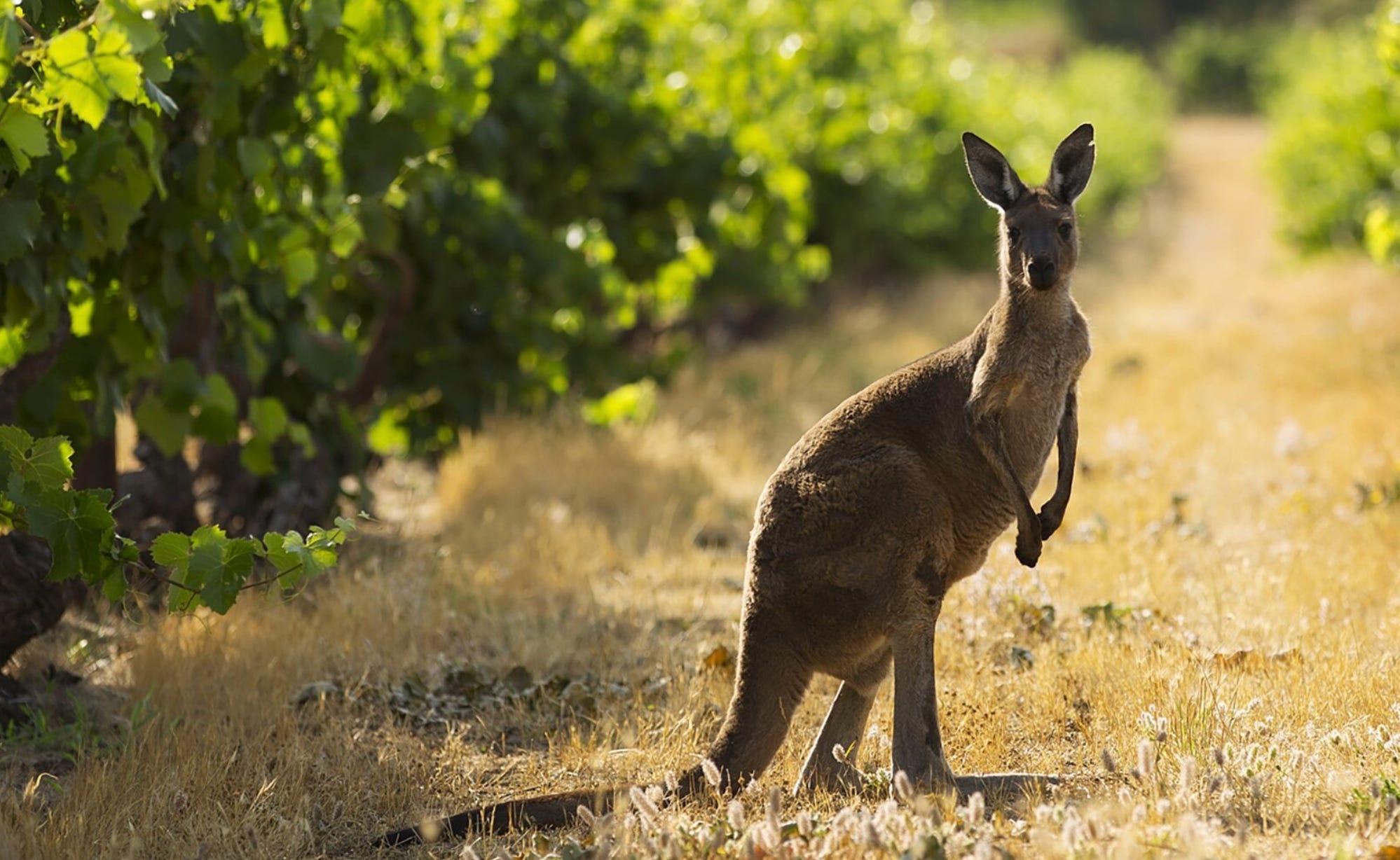
Extreme summer heat and intensely smokey wildfires have hit Europe’s wine regions this year. But other grape-growing regions around the world also are struggling with the impacts of fire and climate change. In a piece for The Conversation, titled “Climate change is putting the squeeze on the world’s grapegrowers: new research,” scientists say a new study investigates the impact on five of Australia’s major wine regions. “Our results show that human-induced climate change has already altered conditions in Australia’s wine regions. Compared with earlier decades, these areas are more likely to be hotter and drier today, including for the peak grapegrowing season around the warmer months of the year. This means winemakers would generally need to move further south or to higher altitudes to chase ideal growing conditions.” Approaches for coping include more efficient water use, planting cover crops, developing more resilient varietals and moving vineyards.

Words to live by . . . .
“Patient Earth is not well. We are not only putting the stability, the resilience, and the life support systems on Earth at risk, we are very close to pushing ourselves across thresholds that can lead to irreversible, unmanageable outcomes.” — Johan Rockström, director of the Potsdam Institute for Climate Impact Research, speaking at a Climate Week event in New York.