

In today’s edition:
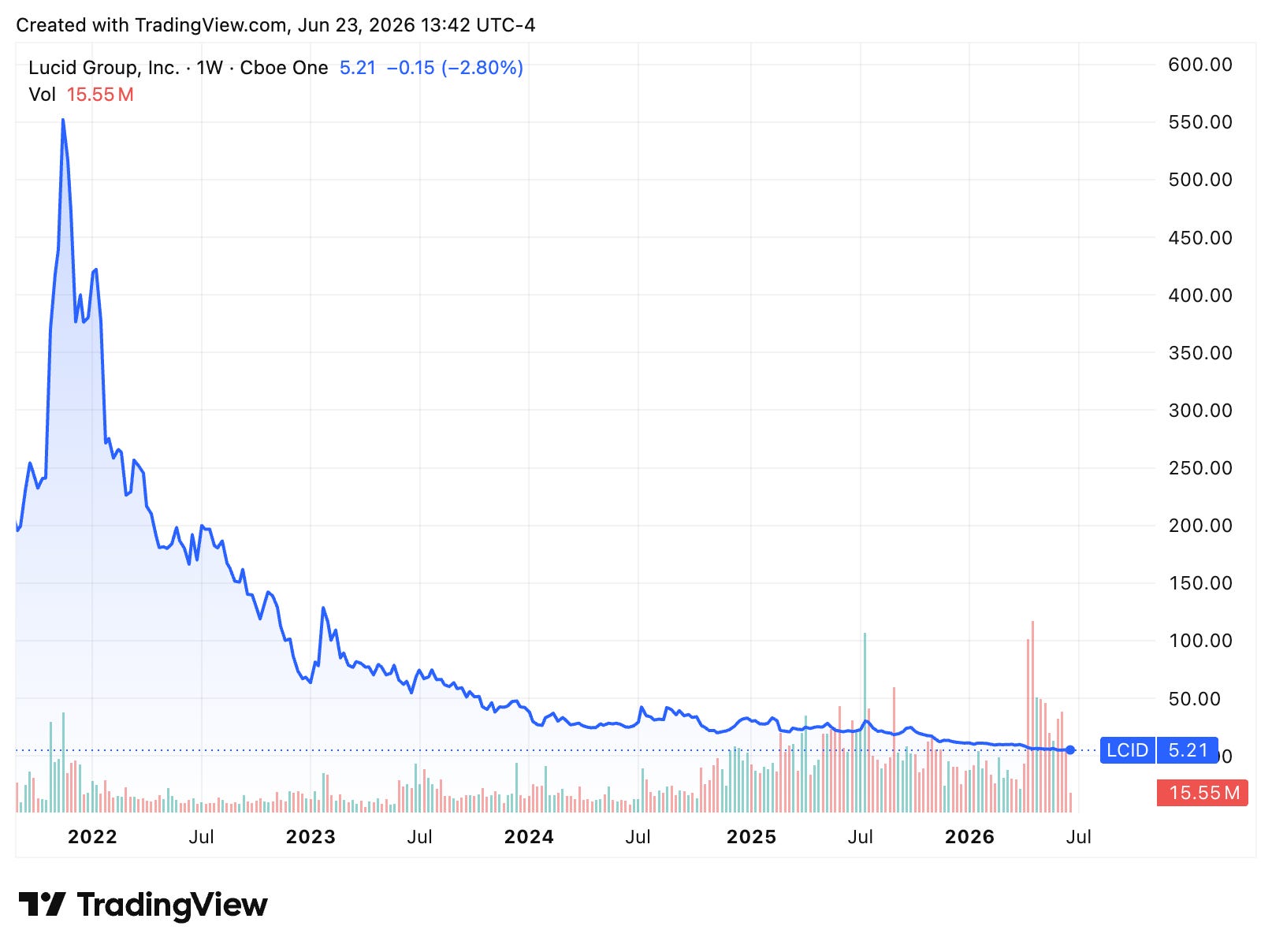
— Lucid, down 92% in the past three years, nearing limits of shareholder patience
— New era begins for power generation and transmission in the American West
— After bipartisan backlash, White House backs off plan to dismantle ocean monitoring
— Beavers called in to solve complex London flooding issues
— ‘The system feeding the human jawbone is the most destructive force on the planet’
Even the Saudis have limits on how much money they’re willing to lose. Lucid Motors LCID 0.00%↑ is finding that out.
For years, the maker of those snazzy, high-end electric vehicles enjoyed protection from the turmoil surrounding other standalone electric vehicle companies such as Rivian RIVN 0.00%↑, or the now-bankrupt Fisker or Lordstown Motors because it was more than half owned by the Saudi Public Investment Fund (PIF). The Saudis even increased their holdings a few years ago to more than 58%.
But a difficult sales environment and the high cost of building the vehicles and the production and distribution deals, even with help from a contract for robotaxis from Uber UBER 0.00%↑, has pulled the stock down 92% over the past three years and more than 50% this year alone.
Earlier this month, the company brought on a new CEO. Silvio Napoli, who promptly fired the interim CEO, eliminated the COO position, and this week laid off 18% of the workforce, or close to 1,200 people. That followed a layoff of 12% earlier in the year.
Most of the other Lucid shareholders are large institutions such as BlackRock BLK 0.00%↑ or Vanguard or State Street STT 0.00%↑ but none of them hold more than 3% or 4% of the shares, which means the Saudis hold the cards. While Saudi ownership used to convey a long-term approach and willingness to spend to buy market share, even they have limits. Just ask the folks at LIV Golf.
With Lucid continuing to lose more money than it makes in sales, this can’t go on forever. Napoli’s arrival means a next stage is likely in the cards.
If you have ideas or suggestions for us, contact me directly at dcallaway@callawayclimateinsights.com.
Tuesday’s subscriber insights
