

Today’s edition of Callaway Climate Insights is free for all our readers. We really want to bring you the best and latest in climate finance from around the world. Please subscribe now.

The spectacular downfall of Nvidia’s Jensen Huang touches so many hot-button issues — AI, espionage, geopolitics, corporate governance, moral hazard, Silicon Valley billionaires, trust in marriage, and the riskiest arena of the global financial system — that it wouldn’t be a stretch to call him the face of hubris of the modern age’s tech barons.
His ascendance and extraordinary wealth accumulation in the past few years coincided with an astonishing arrogance. Fed by special treatment from the White House, leather-jacketed hero worship at public events, and the ability to move the stock market and global economy with his words, Huang assuredly carried the AI world on his shoulders with several bold proclamations as the money poured in.
Among those was that AI growth would need to greatly damage the climate before it is ready to save it.
Huang was the face of the argument that the promise of AI is worth the risk it imposes, including the risk of great environmental destruction. As Nvidia’s business boomed in the half decade since it shifted into building chips for AI, its direct greenhouse gas emissions more than tripled, according to its own reports. Its indirect emissions, or those of its customers and vendors, are estimated by some third parties to have climbed more than eight-fold.
As we begin to digest the ramifications of Huang’s incredible misjudgment, it is worth considering how someone who has been so astonishingly wrong about his own personal and professional superpowers may have also been about the risks of AI. Not to mention the financial risks of the insular, Silicon Valley AI oligarchy and its financial accounting to the global financial system.
In short, Huang lied to everyone about his personal life, thinking he could get away with it, like so many powerful people before him. That’s what hubris is all about. Should we still believe any of his professional proclamations? Starting with his assurance that AI will ultimately fix climate change, but only after more damage first?
If ever there was a time for an AI reckoning, this is it.
If you have ideas or suggestions for us, contact me directly at dcallaway@callawayclimateinsights.com.
Follow us . . . .
X | LinkedIn | Facebook | Instagram
Corporate greenwashing claims overstated

. . . . In our cynical political environment, it’s become fashionable to claim that any corporation making a pledge to reduce emission is simply doing so for marketing purposes, a practice known as greenwashing. But not all emission claims are made for promotional purposes, Mark Hulbert writes. Citing a new study that examined more than 7,000 corporate climate pledges, Hulbert writes that the average pledge resulted in about 9% emissions in the first year and 14% in the first five years. Of course, many companies did just use their pledges to promote themselves, especially in the climate bull market years of 2020-2022, but it’s refreshing to see that many also took their pledges seriously. A timely reminder of the promise of corporate sustainability in these post-election times.
Thursday’s subscriber insights
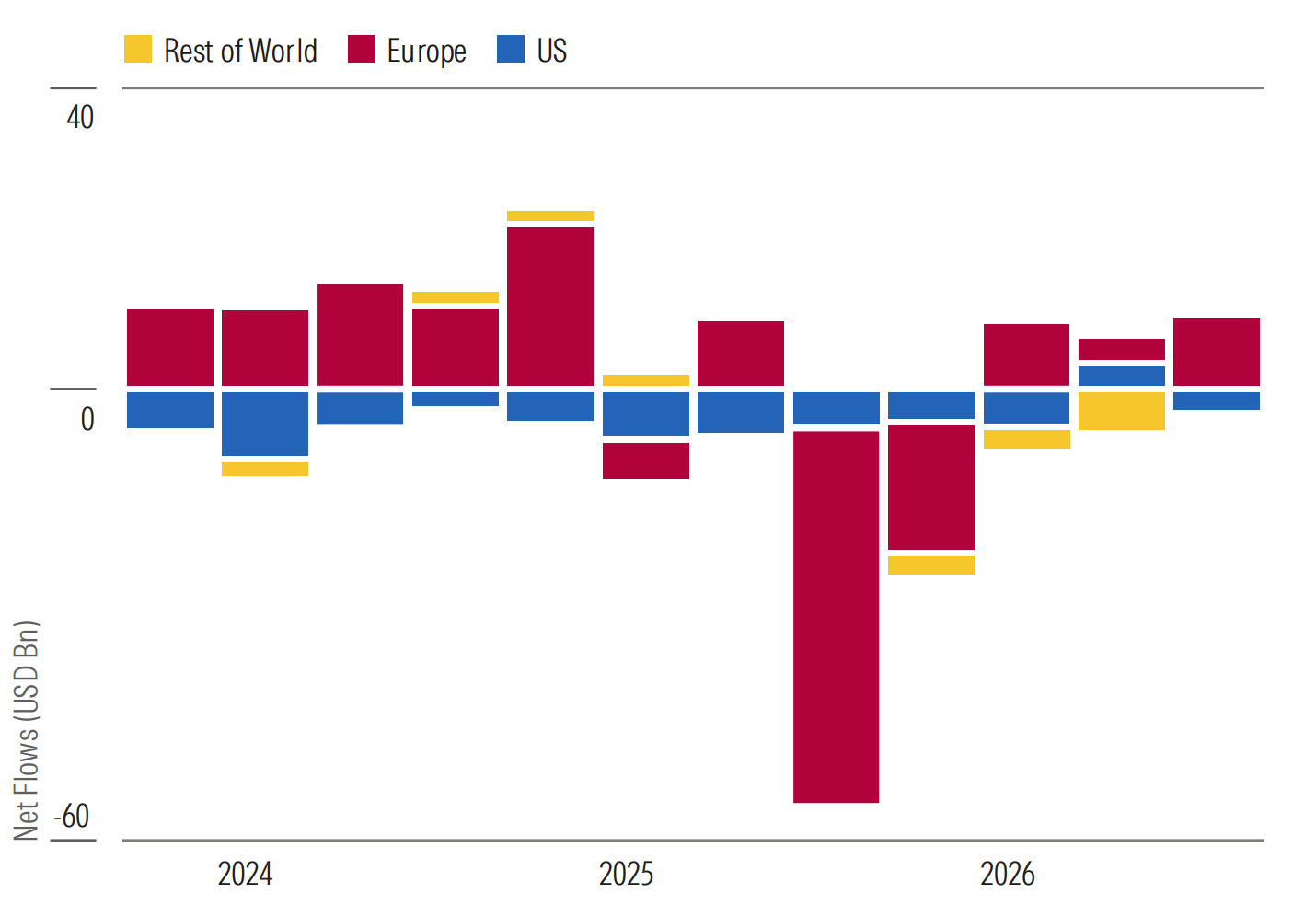
Sustainable fund growth globally surges in Q3 but U.S. left behind
. . . . Investments in sustainable funds surged globally in Q3 despite poor market conditions, though most of the gains were in Europe, which is traditionally the strongest region for climate investing, Morningstar reported this week.
Globally, sustainable funds added $6.5 billion in assets in the third quarter, the most in more than two years and the third consecutive quarter of growth after significant outflows in 2025 after the Trump administration came to power with attacks on renewable energy.
Most of the added investments were in Europe, however, which saw assets almost triple. In the U.S., new investments actually fell, mostly because of weak market conditions on Wall Street. And new fund growth stagnated, which is a potential sign that investment firms are wary of financial markets going into 2027.
Speaking at COP31 in Antalya, Turkey, former vice president Al Gore told a crowd at a Bloomberg event that 2026 could be a turning point for green technology, which he said has continued to accelerate in Africa and China despite being hamstrung by politics in the U.S.
Gore has a good argument. But the lack of new funds is worrisome and worth monitoring. The fourth quarter is typically a bullish timeframe for financial companies and the time when they finalize plans for the next year. A lack of new products sends a message that there is a perceived hesitation in demand, which may require a period of consolidation.
Editor’s picks: Climate change is making clown fish angry
Watch the video: New research is showing that clown fish are turning on each other as rising ocean temperatures threaten their home territory. Scientists studying the colorful fish have found that when they see a competitor’s home coral bleach, the clown fish become more aggressive. FRANCE 24 English reports.
WMO: 2026 is ‘off the charts’
This year will be one of four warmest years on record, while El Niño multiplies risks, the World Meteorological Organization said this week in its State of the Climate Update for COP31. “The year 2026 continues the protracted streak of exceptional global temperatures, melting ice and rising sea levels, with a very strong El Niño event set to unleash even more heat and extreme weather well into 2027,” the WMO said in a news release. Other highlights of the report include data showing sea level and ocean heat are at record high levels and extreme weather has massive economic and human cost. Forecasts and warnings, underpinned by sustained observations, the WMO said, are vital.
Latest findings: New research, studies and projects

Good genes? Chernobyl’s dogs are different
After the 1986 Chernobyl Nuclear Power Plant explosion, humans abandoned a giant surrounding area of about a thousand square miles. Most pets were left behind. The majority, along with livestock, were destroyed. But many animals survived. Studies have since shown all kinds of animals thrived, “free from the interference of living human populations,” according to a report in ScienceAlert. In new research, North Carolina State University geneticist and author Megan Dillon said, “It is unclear how many animals were able to evade the liquidators, but enough domestic dogs escaped this fate to establish persistent populations within the zone.” These dogs, now more than 30 canine generations removed from the disaster, offer a unique opportunity to study how decades of contamination might affect living organisms and their evolution, the report says. Studies have shown that dogs that lived near the site of the abandoned nuclear power plant were genetically distinct from dogs that lived further away, but a follow-up study in 2024 found no evidence that mutations were driving the genetic differentiations. Dillion and fellow researchers say natural selection and genetic drift could be responsible for the genetic differentiations. Some dogs who survived the explosion may have had existing genetic advantages that protected them from cancer, or gave them better immune responses, or resistance to toxic exposures. Geneticist Matthew Breen from North Carolina State University told ScienceAlert, “When we consider the toxic environment around Chornobyl, I can see why most people would think, ‘Surely there’s got to have been some consequence of living in that environment. But what we’re saying is the consequence may not have gone as far as changing the dogs’ genome in order to adapt, it could be the ones that were able to survive the initial exposures had this level of underlying genetic diversity and variants to offer a higher degree of fitness.”

Words to live by . . . .
“Voters just overwhelmingly repudiated the most anti-environmental, pro-fossil fuel administration in U.S. history. This was a historic climate victory in disguise.” — Jamie Henn, director of Fossil Free Media, speaking with Common Dreams.
Love this! Huang: the poster child for corporate hubris !!