

Today’s edition of Callaway Climate Insights is free for all our readers. We really want to bring you the best and latest in climate finance from around the world. Please subscribe now.
Oil prices are on edge this week as the creator of the so-called Board of Peace threatens to start a new war in the Middle East. Prices rose above $70 a barrel for the first time in months as U.S. warships move into place off Iran for potential strikes as soon as this weekend and stocks were weaker.
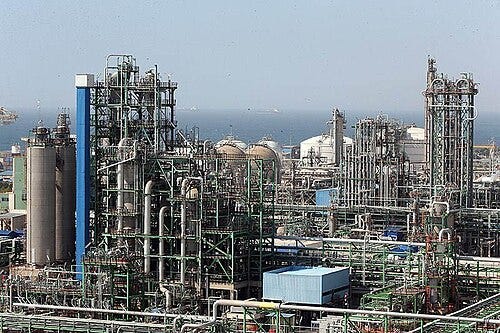
Any attack on Iran, asides from the regional instability it will cause as Israel and other countries become involved, constitutes a high-stakes gamble by the White House that the U.S. currently produces and stores enough oil to withstand a disruption in Iranian oil supply, which is about 5% of global oil. After all, prices have withstood several disruptions in recent years, including the bombing of Iran last June and the recent attack on Venezuela.
But Iran’s threats to close the Strait of Hormuz, responsible for 20% of world oil shipping, and to potentially bomb oil facilities in other countries is the wildcard. A prolonged spike in oil — say, if the attack takes more than a few days — would inevitably cause a rise in U.S. gasoline prices, at a prickly political time for the White House.
The ripple effects in the climate world, beyond the obvious surge in pollution caused by war, would also be swift. Renewable energy stocks might be seen as safe havens when oil prices rise but in fact they would fall as well because higher oil typically raises inflation which could lead to higher interest rates.
Higher energy prices are bad for the market in general and in the political context of the U.S. midterm elections could not come at a worse time for the White House. Normally, how one country’s elections could be impacted by a regional war that could devastate millions of lives would not be a priority. But this White House is different. Everything is calculated by polls.
As we move into the weekend, there is still time for an offramp for this administration. In the meantime, the markets are setting themselves up to react just in case the oil bet goes wrong this time.
Don’t forget to contact me directly if you have suggestions or ideas at dcallaway@callawayclimateinsights.com.
Follow us . . . .
Twitter | LinkedIn | Facebook | Instagram
How the energy leaders behind Trump’s war on climate changed their stripes

. . . . When it comes to President Donald Trump’s political targets, misleading Congress is treated like a high crime, even if the evidence of duplicity is flimsy at best. When members of Trump’s own cabinet are involved, however, deceiving Congress is no big deal, writes Bill Sternberg. The three main leaders of Trump’s energy and environmental policies — EPA Administrator Lee Zeldin, Interior Secretary Doug Burgum and Energy Secretary Chris Wright — all portrayed themselves as believers in human-caused climate change and careful stewards of the environment after being nominated to their positions. After winning confirmation, all three have been complicit in gutting clean-energy programs and overturning efforts to combat global warming. But with Republicans in charge of the Dept. of Justice and both chambers of Congress, don’t expect any repercussions for the flip-flops.
Thursday’s subscriber insights

Uber lends charge to struggling EV infrastructure
. . . . Uber UBER 0.00%↑ shock waves through the electric vehicle charging industry this week when it announced it would spend $100 million on new charging infrastructure in key cities but also boost rival chargers by guaranteeing a minimum spend from drivers in exchange for discounted prices.
The promise was made as part of a rollout of a new charging investment at Uber hubs in San Francisco, L.A. and Dallas. The company said it would build new charging and clean depots for both human-driven and autonomous vehicles in the cities, as well as pit stops for robotaxis in other cities.
But the plan to work with rivals such as EVgo EVGO 0.00%↑ by guaranteeing Uber business in exchange for discounts is what really caught investor attention. EVgo shares rose almost 7% on the news Wednesday while Uber shares were up more than 2%. Shares of Blink Charging BLNK 0.00%↑ were up almost 4% while ChargePoint Holdings CHPT 0.00%↑ shares were up about 2%.
Uber’s latest initiative comes as it prepares to wage battle in the competitive ridesharing business over the future of autonomous electric vehicles, seeking to use its vast existing network to keep an edge over growing rivals such as Google’s GOOGL 0.00%↑Waymo and Tesla TSLA 0.00%↑. As driverless ridesharing becomes more mainstream and the need for constant charging for the vehicles that can operate almost 24/7 becomes a business imperative, the businesses with the largest network of charging stations will have an advantage.
The promise of negotiating discounts for struggling human Uber drivers is a clever way to gain market share for the ride sharing giant while also maintaining the growth of the overall charging infrastructure, which is essential for any of this to work.
Editor’s picks: What Antarctica is telling us; plus, too much snow
Watch the video: In yet another climate crisis rollback in America, the 2009 endangerment finding — which determined that greenhouse gases are a threat to public health and welfare — was revoked on Thursday. President Trump calls it the “largest deregulatory action in American history.” Climate scientist David Holland warns about the consequences of climate change being detected in Antarctica. He speaks to Hari Sreenivasan as he returns from a recent expedition there.
Too much snow
After all the worries about insufficient natural snow for the 2026 Milan-Cortina Games — along with a flurry of stories about the need for machine-made snow at the Winter Olympics — Madre Natura flipped the script this week. The Associated Press reports snowstorms brought feet of snow to the Italian Alps, forcing organizers to scratch and reschedule such competitions as the snowboarding slopestyle events and big air finals in Livigno. But the unreliability of natural snowfall isn’t the only reason snow-making machines are needed. Along with the shorter winters and warmer temps wrought by climate change, machine-made snow has practical purposes: It provides the consistent, durable surfaces needed to keep athletes safe during high-speed alpine events. Additionally, the real storms can obscure the trails and push competitors off course.
Latest findings: New research, studies and projects

Strongest hurricanes are getting stronger
The strongest hurricanes are getting stronger as a result of climate change. And warmer ocean waters may enable more hurricanes to form near the U.S. coast, increasing the number of U.S. landfalls. Jeff Masters, in a report for Yale Climate Connections titled The future of Atlantic hurricane tracks, looks at what we know and don’t yet know about how climate change could affect the paths of these storms — and the all-important question of how often they’ll make landfall. According to the report no significant north-south or east-west changes in the tracks of named Atlantic storms have been reliably detected in recent decades, though there appears to have been a significant shift to the south for storms attaining hurricane strength. The report states, “We should distrust climate models that show a future eastward shift in steering currents that would lessen the landfall risk for the U.S. and Caribbean, because the same models have failed to accurately capture the influence of climate change on El Niño and La Niña.”

Words to live by . . . .
“There is no longer any doubt about the reality of global warming, the dangers of it, or the causes of it. … We can’t undo what we have done, but we can alter how bad the future becomes. We can move to sustainable and efficient energy systems, make production and housing and transport more energy efficient, replant forests, invent new ways to generate or save energy, or more.” — The Rev. Jesse L. Jackson Sr.