

Today’s edition of Callaway Climate Insights is free for all our readers. We really want to bring you the best and latest in climate finance from around the world. Please subscribe now.

As global financial markets shake with debt concerns ahead of next week’s 39th anniversary of Black Monday, two potential crisis flashpoints look set to collide. The AI debt binge and the growing pullback of insurers from climate bets are suddenly both occupying the risk desks of the largest investors.
Concerns that AI companies are borrowing more money to fund AI data centers and research than they will be able to pay back with proceeds from AI have climbed steadily this summer. But this week, Coreweave, a troubled AI cloud provider backed by Nvidia NVDA 0.00%↑, told the Financial Times it will look to insurers to secure more funds as the yields on its debt soar to ominous levels.
The Coreweave story shocked the market and has sent Nvidia shares down about 10% in the past 10 days, as well as the rest of the tech-backed chips and AI stock group. Trouble is that insurers might not represent the vast pools of money the AI market thinks they do. A horrible summer of claims from global warming has them increasingly retreating from backing properties in climate-threatened areas of the U.S. and Europe and cutting risk investment in general.
It’s common on Wall Street for analysts to look for comparisons to past financial crises such as Black Monday in 1987 or the Great Financial Crisis of 2007-2008, but as we’ve written before, both were started in the debt markets. It would be foolhardy not to at least be aware.
The AI frenzy is intrinsically tied to the power generation and renewable energy markets where many climate investors reside. Just as many of those companies enjoyed the boom of the past few years, fueled by borrowing for data center construction and low interest rates, the same ripple effect now threatens in reverse.
With earnings season set to go into full swing next week, and the U.S. midterm elections less than three weeks away, the price of everything is on the table. As with all potential money crises, investors are advised to watch the banks. As they go, so go the rest of the markets.
If you have ideas or suggestions for us, contact me directly at dcallaway@callawayclimateinsights.com.
Follow us . . . .
X | LinkedIn | Facebook | Instagram
The scariest part of Halloween for climate advocates

. . . . It’s not the tiny spook-filled evening of Halloween that is the scariest part of the holiday for climate advocates, it’s the day after, writes Mark Hulbert. That’s the day when some 35 million costumes will be tossed in the dump, most of them synthetic fibers made from fossil fuels and worn only once or twice. While the kids wear their costumes for only a few hours, the environmental breakdown time of the material could take decades, if not centuries. Halloween is the pinnacle of the year for the fast-fashion industry, which has boomed under millennials and Gen Z’ers, who rapidly buy and sell clothes on their phones. One company, China’s Shein, reportedly sells up to 10,000 new products a day. Hulbert said aside from withholding candy on Halloween, the problem of fast-fashion needs to be dealt with on the regulatory level.
Thursday’s subscriber insights
After a long, hot, deadly summer, geo-engineering back in the limelight
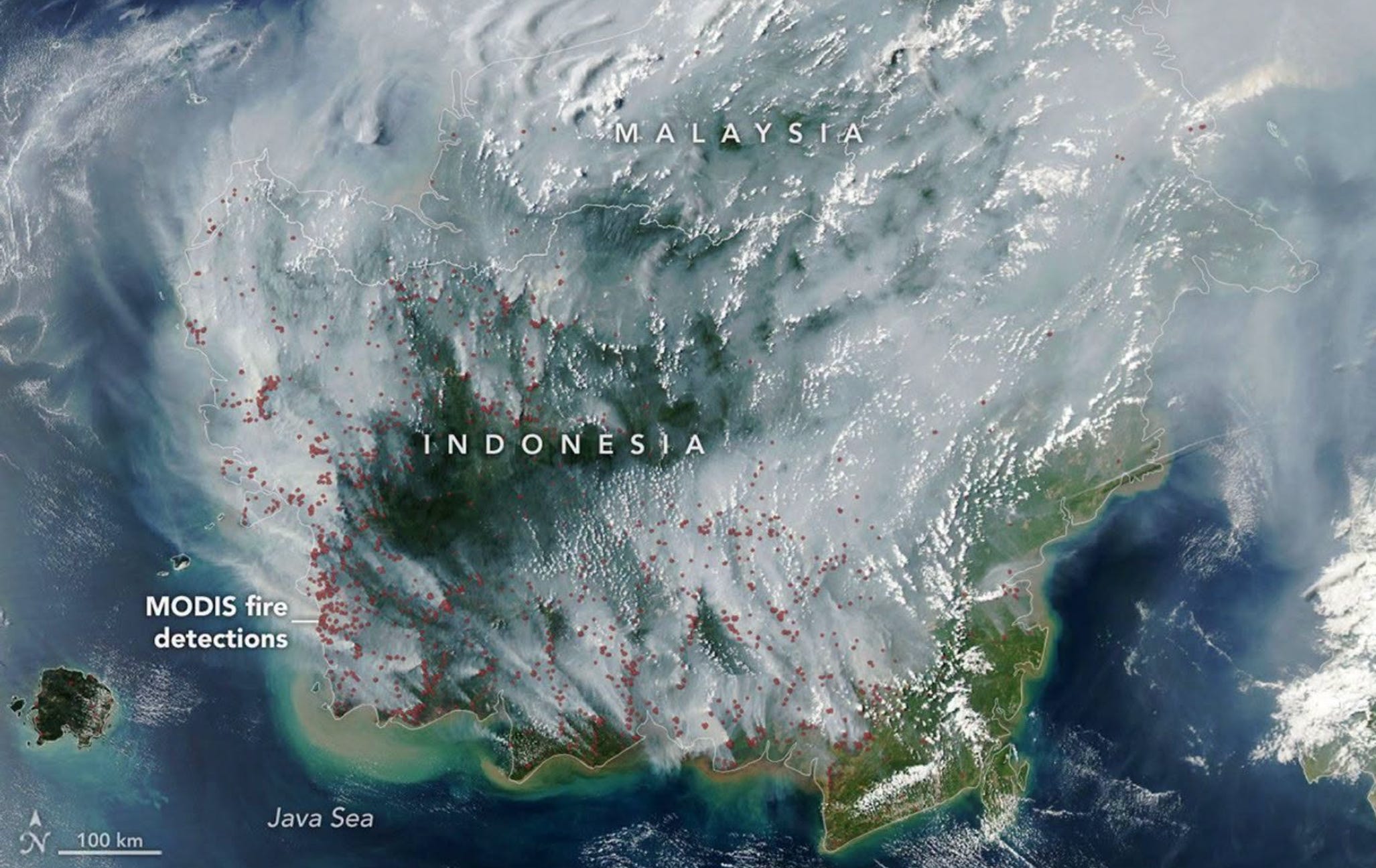
. . . . In Indonesia, authorities are considering deploying dry ice pellets into the clouds above airports to help clear the wildfire smoke that has blanketed the country, according to Bloomberg. In Europe, however, the EU is working to fund a campaign to detect and prevent unauthorized use of geo-engineering techniques to block or curtail the sun by private companies or even state governments.
After a long, hot, deadly summer, geo-engineering is back on the table around the world. Each year as it gets hotter, and more people die and countries lose economic productivity because of excessive heat, the debate rises again. Several small, unauthorized experiments have been attempted in Europe and the U.S., each time shut down by authorities.
But China, and now Indonesia, routinely seed clouds and deploy efforts to change their climate, usually to remove smog caused by wildfires or excessive coal usage. Indeed, if any party makes a serious run at geo-engineering, it will likely be in Asia, where global warming is even more of a problem than in Europe and the U.S.
The problem with attempts like this to stop it is that there is no international agreement, and unlikely to be one. In a world where many states are suffering much worse than others, agreements on holding back important research are a long shot. And even if agreed, pretty much unenforceable.
There is significant research on geo-engineering, and several different types of it; crop dusting, for example. Like AI, it is going to advance whether governments like it or not. The issue is how to design guardrails around it and fund legitimate experiments that bring the international community closer to a collective answer, before a rogue attempt triggers something catastrophic.
Editor’s picks: ‘Nordic newcomers to the world of wine’
Watch the video: Record high temperatures this year forced European wine producers to harvest grapes much earlier than usual. French wineries fear it will lead to the worst season in 30 years. But Nordic newcomers to the world of wine are toasting what they believe will be a vintage harvest, thanks, in no small part, to climate change. Special correspondent Malcolm Brabant reports from Sweden for PBS News Hour.
Latest findings: New research, studies and projects
Most and least energy efficient states
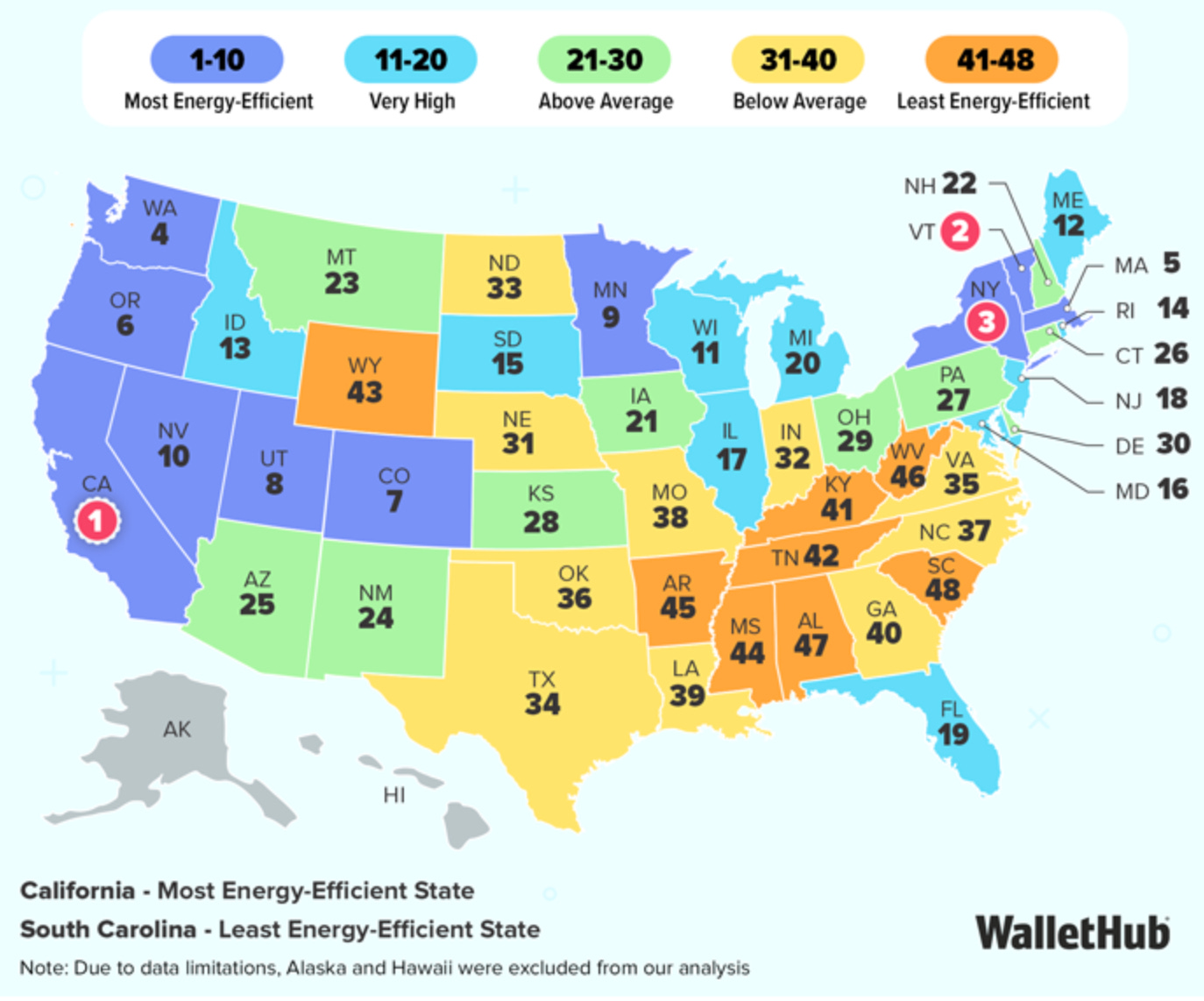
The average U.S. family spends at least $2,000 per year on utilities, according to the U.S. Department of Energy, with heating and cooling alone accounting for more than half the bill. In addition, the average consumer spent another $2,411 on gasoline in 2024. To gauge the impact of doing more with less energy, WalletHub measured the efficiency of auto- and home-energy consumption in 48 U.S. states. California is the most energy-efficient state, boasting the lowest residential energy consumption per capita and the third-highest home energy efficiency. Vermont is the second-most energy-efficient state, in large part because it’s the second-most vehicle-fuel efficient in the country. Vermont residents drive an average of around 21 miles per gallon of gasoline. New York is the third-most energy-efficient state overall, ranking highly for both home and automobile efficiency.

Words to live by . . . .
“October is the month for painted leaves. Their rich glow now flashes round the world.” — Henry David Thoreau, Autumnal Tints.