

Today’s edition of Callaway Climate Insights is free for all our readers. We really want to bring you the best and latest in climate finance from around the world. Please subscribe now.

I was new to my first reporting job at the Boston Herald in October 1987 when the stock market crashed more than 20% in one day in the worst week on Wall Street since 1929. A global market catastrophe was also my first front-page byline.
Only in retrospect did I, and many investors realize that the crash had been preceded two months earlier by significant declines in bond prices that were an ominous but overlooked signal to the end of a five-year bull market. Equities kept climbing for weeks after until that fateful day on Oct. 19.
I think about that one-two punch every time I see a plunging bond market in August, as we have seen in the past few weeks. Bond yields are soaring, likely in anticipation of higher interest rates to come. Also, in reaction to record borrowing by the U.S. government and corporate America.
The soaring stock market has given everybody new confidence in the economy and spawned even more borrowing. This is also true of green bonds, which had a record second quarter of issuance of $193 billion. And blue bonds, which fund maritime environmental projects, and are debuting at six times the pace of last year.
Renewable energy and climate startups are particularly impacted by rising interest rates, based on the amount of funds they’ve borrowed to scale their operations. The bull market in green companies that dominated from 2018 to 2022 ended not because of a shift in climate investing intentions but because of the last run higher of rates.
So while things look good in the stock market today, with Broadcom’s AVGO 0.00%↑ sparkling earnings and anticipation over the coming IPO of Anthropic, when I see bonds wobble combined with record new issuance in green bonds, it gets my attention.
Of course, there have been many years since 1987 when the bond market has dropped in late summer, and nothing happened. And maybe it was just that the full scare of that October day so long ago is particularly memorable to me. But still, just sayin’.
If you have ideas or suggestions for us, contact me directly at dcallaway@callawayclimateinsights.com.
Hulbert: How ESG ratings are exacerbating climate change

. . . . Are ESG ratings actually making the world warmer? It appears so, according to a new study from the University of California at Berkeley and Hankuk University in South Korea, writes Mark Hulbert. The study finds that the vast majority of ESG ratings reward companies more for appearing sustainable, such as with their climate disclosure strategies, rather than actually cutting carbon intensity. Hulbert writes that the study could upend the entire ESG universe by declaring it too vague and blurred to actually show investors how to invest to fight global warming. Separating the “social” and “governance” themes from “environmental” in ESG parlance doesn’t help either. Only by reducing harmful carbon emissions can companies help the world mitigate the worst impacts of global warming. Remember that when you choose a stock because of its high ESG rating, Hulbert writes.
Thursday’s subscriber insights
Missing climate targets is not the end of the world — yet
. . . . The United Nations this week stated what everyone in the climate world has already known for years: humanity has failed to keep average global temperature levels from rising more than 1.5°F over pre-industrial levels in the [ast decade and it’s going to get a lot hotter very soon.
At some point in the next few years, the UN said, temperatures currently at 1.4°F above those levels will soar past 1.5°F and up to at least 1.8°F, or to a worst-case 2.6°F. The Paris Agreement of 2015, signed by most of the world’s countries, failed as the countries continued to burn fossil fuels even while building out renewable energy strategies.
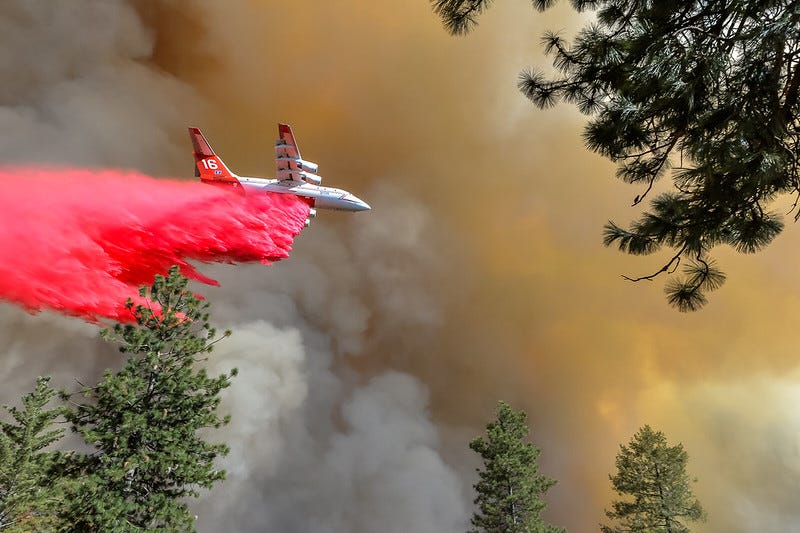
For anyone who experienced the extreme heat, wildfires, crazy rain and windstorms, and deadly floods this summer, this is not welcome news. But meeting targets - even scientific ones — are not the primary goal here. While they present an understandable marker for people to strive for, they are just numbers after all.
The facts are that even as we have continued to bicker about the reality of climate change and fight over precious funds to help mitigate it, new technologies are making vast improvements in how we consume, store and distribute energy. Indeed, we may have blown through the 1.5 target years ago without some of the advancements we’ve seen in wind power, solar power, and electrification.
Pessimists will note that the extreme heat of this past summer doesn’t even reflect the fuel we are burning now, and that the worst is still yet to come. That may be true, but technology advancements often happen quicker and with dramatically more impact than academic timelines forecast. It took only a few years for almost everyone on the planet to have an iPhone or similar mobile product.
Records are indeed made to be broken. But that can work both ways.
Editor’s picks: Super El Nino is here
Watch the video: As super El Nino strengthens, study suggests climate change is intensifying El Ninos. The Associated Press reports.
Words to live by . . . .
“The challenge is no longer simply developing carbon dioxide removal technologies. It is building the financial, regulatory and market infrastructure needed to move CDR from early-stage projects to industrial-scale deployment.” — Nasim Pour. lead, Climate Finance, World Economic Forum.