


. . . . Welcome back to Green Lights. Here’s our roundup of the best of Callaway Climate Insights. This week, David Callaway pays tribute to the Rev. Jesse Jackson’s dedication to climate justice, and Bill Sternberg looks at the actions, not just the words, of the three main leaders of Trump’s energy and environmental policies. Have a great weekend and please subscribe to support our climate finance reporting.

. . . . It was fitting that the Rev. Jesse Jackson passed away during Black History Month, the annual celebration of black contributions to America that he championed for 50 years since President Gerald Ford officially recognized it in 1976. Jackson spent his life campaigning, including for ways to fight climate change. The battle for climate justice, helping vulnerable communities adapt to climate change by removing or better regulating the factories and manufacturing plants often located nearby, was one of his favorite subjects.

. . . . When it comes to President Donald Trump’s political targets, misleading Congress is treated like a high crime, even if the evidence of duplicity is flimsy at best. When members of Trump’s own cabinet are involved, however, deceiving Congress is no big deal, writes Bill Sternberg. The three main leaders of Trump’s energy and environmental policies all portrayed themselves as believers in human-caused climate change and careful stewards of the environment after being nominated to their positions. After winning confirmation, they have been complicit in gutting clean-energy programs and overturning efforts to combat global warming. But with Republicans in charge of the Dept. of Justice and both chambers of Congress, don’t expect any repercussions for the flip-flops.

. . . . Oil prices are on edge this week as the creator of the so-called Board of Peace threatens to start a new war in the Middle East. David Callaway writes that higher energy prices are bad for the market in general and in the political context of the U.S. midterm elections could not come at a worse time for the White House. As we move into the weekend, there is still time for an offramp for this administration. In the meantime, the markets are setting themselves up to react just in case the oil bet goes wrong this time.

. . . . Uber jolted the EV charging industry this week when it announced it would spend $100 million on new charging infrastructure in key cities but also boost rival chargers by guaranteeing a minimum spend from drivers in exchange for discounted prices. David Callaway says the promise of negotiating discounts for struggling human Uber drivers is a clever way to gain market share for the ride sharing giant while also maintaining the growth of the overall charging infrastructure, which is essential for any of this to work.

. . . . One of the beneficiaries of the political green gamesmanship over the long weekend between California Gov. Gavin Newsom, UK Energy Secretary Ed Miliband and President Donald Trump was Britain’s Octopus Energy, the sprawling green energy giant that has long sought a beachhead in the U.S. As part of a broad deal between Miliband and Newsom to share green energy resources and invest in each other’s renewable technology, Octopus said it will invest more than $1 billion in California clean tech. The deal underscores the reality that green investment will continue to evolve no matter how much political pollution, or hot air, is spewed. Because at the end of the day it pays off.

. . . . The strongest hurricanes are getting stronger as a result of climate change. And warmer ocean waters may enable more hurricanes to form near the U.S. coast, increasing the number of U.S. landfalls. A new report from Yale Climate Connections looks at what we know and don’t yet know about how climate change could affect the paths of these storms — and the all-important question of how often they’ll make landfall.
More greenery . . . .
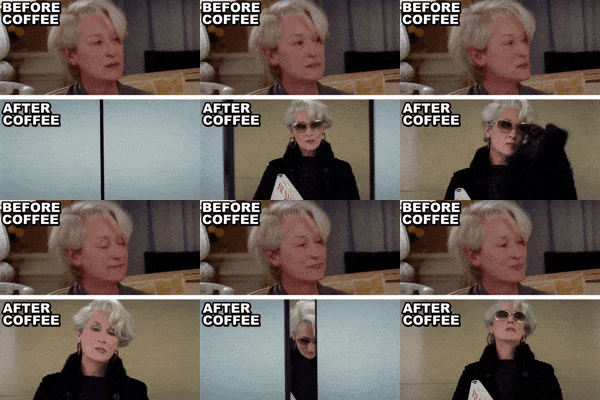
Coffee news: More weeks of ‘coffee harming heat’ (Roast Magazine)
Or else what?: U.S. Tells International Energy Agency to Drop Its Focus on Climate Change (The New York Times)
Losing energy: Climate change is accelerating but nature is slowing down (Science Daily)
Big survey: Half of Americans think they’ll see catastrophic impacts of climate change in their lifetimes (YouGov)