


. . . . Welcome back to Green Lights. Here’s our roundup of the best of Callaway Climate Insights. David Callaway looks at why big tech is backtracking on climate pledges to gain a foothold in the AI arms race. Plus, he explains why two more energy companies took the offer when the Trump administration said it would pay them hundreds of millions of dollars not to build offshore wind farms. Have a great weekend and please subscribe to support our climate finance reporting.

. . . . The backtracking on climate pledges by large Wall Street firms in the past few years has fully spread to the biggest tech companies as their emissions from power used to scale their AI ambitions soar, David Callaway writes. The problem is that in their rush to build data centers to compete in the AI arms race, the large tech companies have for the most part chosen natural gas as their power source. As a result, their emissions have leaped rather than fallen.

. . . . People who follow the global oil markets tend to measure important shifts in geopolitical, generational events. The departure of the UAE from OPEC after 58 years was a long time coming, but the Iran war pushed them over the edge. And they decided to go it alone. David Callaway explains why these events are good for clean energy and why oil demand may never be the same.

. . . . Top Silicon Valley fundraisers are investing in a new AI idea that takes energy from the sea. In the tech arms race around AI, even space is no longer the final frontier. An ocean technology company from Oregon just raised $140 million from some of Silicon Valley’s leading fundraisers.

. . . . Of all the business and investing strategies available to us, there’s nothing like being paid not to work, David Callaway writes in his Zeus column this week. So, he says, it’s understandable why two more energy companies took the bid when the Trump administration said it would pay them hundreds of millions of dollars not to build offshore wind farms on the East and West coasts.

. . . . California and two other states agreed last week to cut their water usage for both farms and consumers over the next three years as the rapidly drying Colorado River crisis in the Western U.S. becomes unsustainable after another year of drought and lack of snowpack. These are the sacrifices, forced upon business and the public, that will become more prevalent in coming years if action isn’t jointly taken to prevent the ravages of climate change.
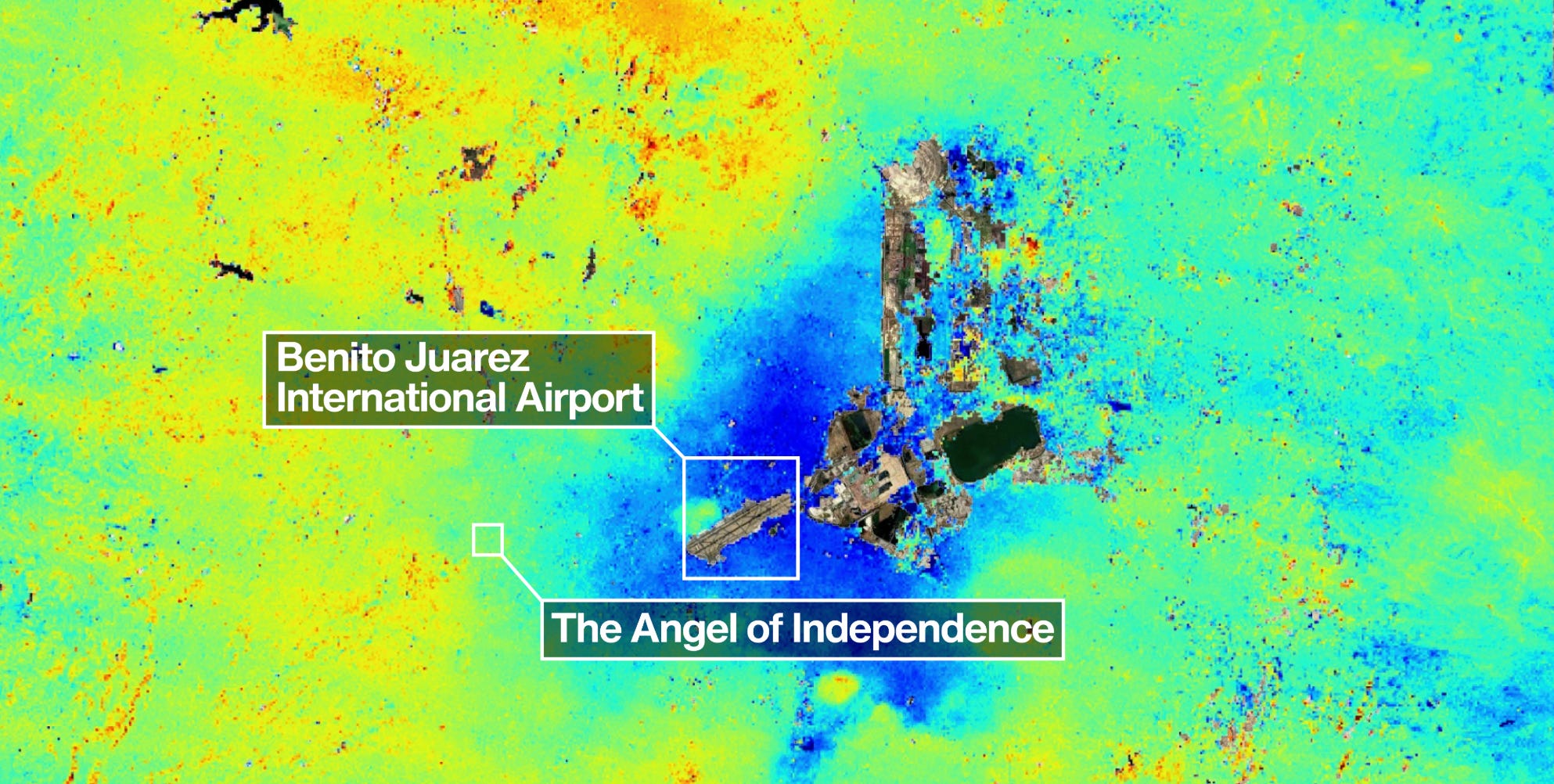
. . . . Mexico City is sinking so quickly it can be seen from space. New satellite imagery released this week by NASA shows the Mexican capital, covering 3,000 square miles and home to 22 million people, is one of the world’s fastest-subsiding metropolises. Extensive groundwater pumping and urban development have dramatically shrunk the aquifer. Parts of the region are sinking at a rate of about 9.5 inches a year.
More greenery . . . .

Don’t forget the plants: Climate change is endangering tens of thousands of species (The AP)
Gesundheit: How Climate Change Makes Your Allergies Worse (Inside Climate News)
Did that age well?: A look back at ‘An Inconvenient Truth,’ 20 years later (Yale Climate Connections)
Don’t miss a spot: Despite increasingly effective sunscreens, skin cancer is on the rise (AAMC)